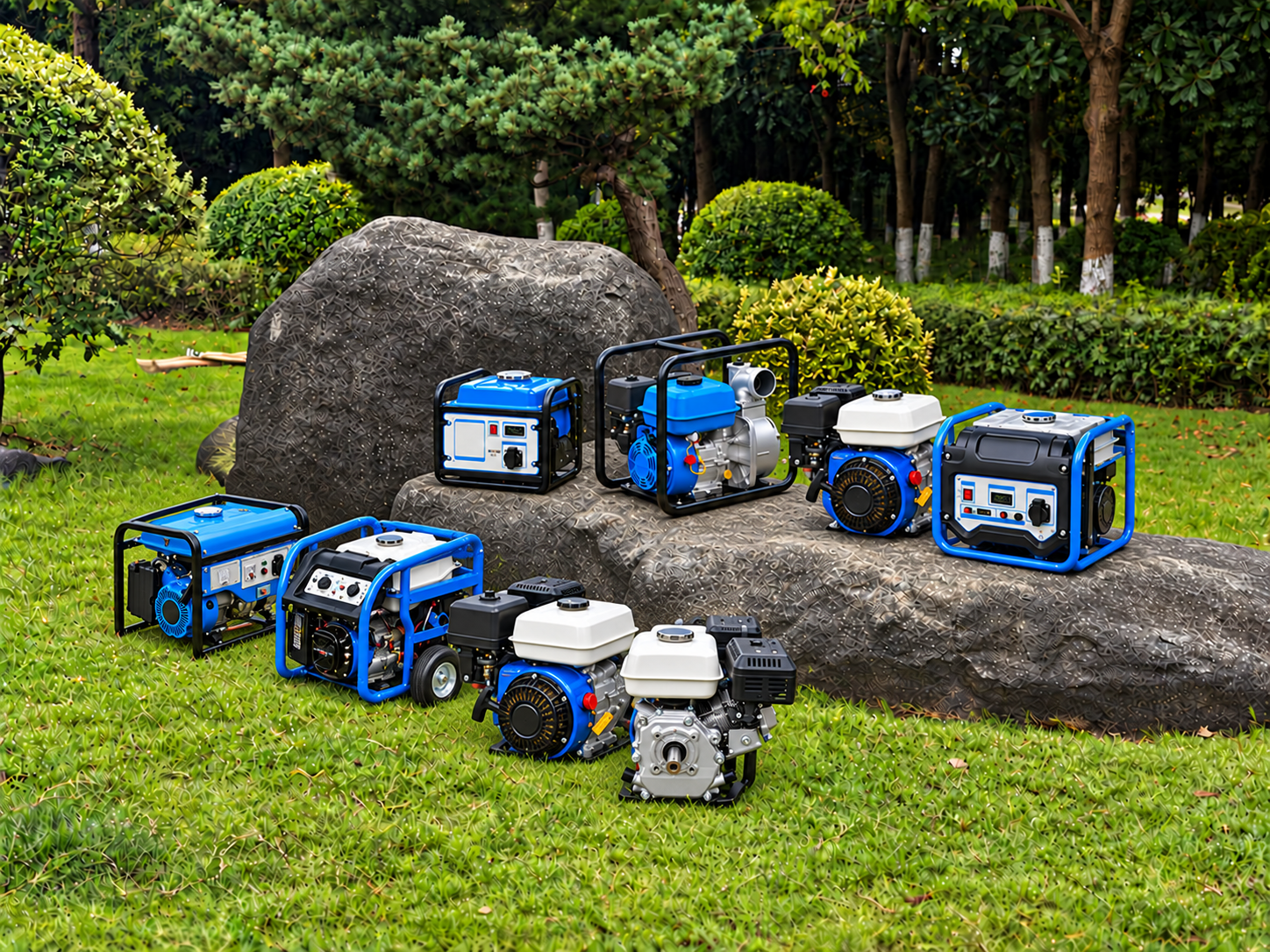
The choice between a diesel and a gasoline generator is not about which is better. It is about duty cycle, mobility, fuel supply, and the market you sell into. Gasoline units win on weight, price, and easy starting. Diesel units win on fuel efficiency and long, continuous runs. Most portable backup and jobsite buyers land on gasoline, which is why we build our generator line around it. Here is the comparison in plain terms, so you can decide on total cost of ownership rather than sticker price.
Comparison at a glance
| Factor | Gasoline | Diesel |
|---|---|---|
| Purchase price | Lower | 30-50% higher for similar output |
| Fuel burn per kWh | Higher | Lower |
| Weight | Lighter | Heavier |
| Cold starting | Easier | Needs glow plugs or strong battery |
| Service life | Good | Longer under continuous load |
| Certification | Simpler (CE/EPA/CARB) | Stricter emissions rules |
| Best duty | Portable, intermittent | Stationary, long-hour |
1. Fuel: what you actually pay per hour
Diesel engines burn less fuel per kilowatt-hour, so a diesel generator costs less to run over a long shift. Gasoline engines burn more, but the machines are far cheaper to buy. For a generator that runs a few hours during an outage or a day of site work, the fuel saving rarely repays the higher diesel purchase price.
- Gasoline: lower purchase price, higher fuel burn per kWh, easy to source in small quantities.
- Diesel: higher purchase price, lower fuel burn, safer to store in bulk, longer shelf life.
Storage also differs. Gasoline degrades within months unless treated, so buyers in hot markets should plan turnover. Diesel keeps for a year or more in a sealed tank, which is one reason it suits remote sites that refuel in bulk. For a dealer selling units to end users, gasoline is simpler to hand over and explain.
2. Upfront price and cash flow
A diesel engine costs more to manufacture than a gasoline engine of similar output, and the difference shows on the invoice. For the same kilowatt rating, a gasoline generator is typically 30 to 50 percent cheaper. Buyers stocking backup, rental, and retail units usually take the gasoline saving and reinvest it in volume, because cash tied up in a diesel unit sitting on a shelf earns nothing.
3. Runtime and duty cycle
This is where diesel earns its keep. Diesel engines run cooler and last longer under continuous load. If a generator must run a full irrigation shift, a construction site, or a rural clinic for hours every day, diesel is the right call. If it runs a few hours at a time with rest between, gasoline is enough, and the extra diesel capacity goes unused.
Think of it as hours per year. A backup unit that runs 40 hours a year will never recover the diesel premium. A site unit running 2,000 hours a year will, and then some, which is why the duty-cycle question beats every other factor.
4. Starting, weight, and portability
Gasoline engines start easier in cold weather and weigh less, so a gasoline generator is simpler to wheel around a site or load into a pickup. Diesel units are heavier and often need glow plugs or a stronger battery. For a unit that moves between jobs or rides in a service van, gasoline wins on handling, which is why most portable generators on the market are gasoline.
5. Maintenance and service life
Both fuels need oil, filters, and scheduled service. Diesel engines generally go longer between major rebuilds, but when they fail, parts and skilled mechanics are harder to find in some markets. Gasoline engines are simpler, and 168F to 192F class parts are available almost everywhere, which keeps a dealer or rental operation service cost predictable.
6. Noise, emissions, and certification
Gasoline generators run quieter and are easier to certify for CE, EPA, and CARB markets. Diesel emissions rules in Europe and North America keep tightening, which adds cost and paperwork to importing diesel units. If you sell into regulated markets, a gasoline unit with EPA and CARB marks is the lower-friction option, and it clears customs faster.
On noise, an enclosed diesel set still runs louder than a comparable gasoline unit, which matters on job sites near housing or at events. Both can be silenced with enclosures, but the enclosure cost is easier to justify on a diesel unit that already carries a premium price.
7. Which business buys which
- Home backup and small retail: gasoline, almost always.
- Construction and event rental: gasoline for portability, unless the site runs all day.
- Agriculture and irrigation: diesel where pumps run long hours, gasoline where they move between fields.
- Telecom towers and remote facilities: diesel, for continuous duty.
- Importers and distributors: gasoline, for higher volume and simpler certification.
- Marine and fishing operators: gasoline for small portable sets, diesel for workboat auxiliaries.
8. How to decide
Choose gasoline when
The unit runs under four hours a day, moves between sites or jobs, needs easy cold starting, or sells into a market that requires CE, EPA, or CARB certification.
Consider diesel when
The unit runs around the clock in one place, fuel cost per hour dominates, or the site has no easy supply of gasoline and stores diesel in bulk.
Write down three numbers: how many hours the unit runs per day, how far it has to move, and what it has to power. Compare a diesel quote against the fuel saving over the unit’s expected life, then decide on total cost of ownership rather than the number on the price tag.
Talk to our export team
We build portable gasoline generators and gasoline engines for backup, jobsite, and irrigation use, with CE, EPA, CARB, and EURO-V certification across the range. Browse our gasoline generators and gasoline engines, then send us your duty cycle, voltage and frequency, and target order size. We will quote factory-direct pricing and the exact certification your market needs.